
Reading Is Resistance
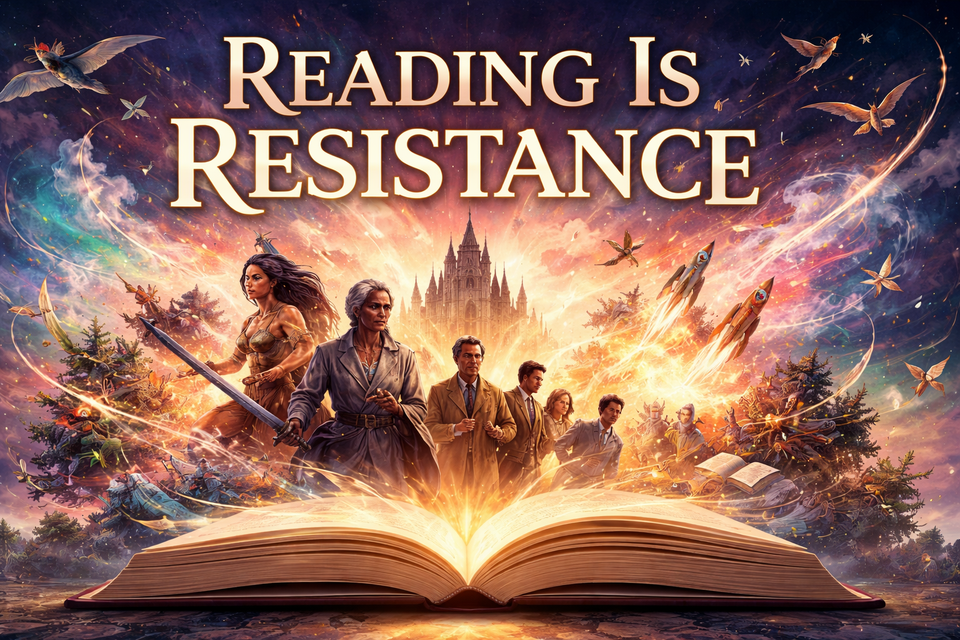
When I was a child, my nose was always buried in a book—everywhere we went. My brother, sister, and even my parents would try to get my attention, only to be met with a recitation of whatever page I was on. “Jodi, come on, listen—” they’d begin. And I’d reply, matter-of-factly, “And then she said…” My way of saying, in no uncertain terms, I am reading, and I will not be disturbed. Even then, reading was not just a pastime; it was a statement, a sanctuary, and a means of engaging with the world on my own terms.
Of all the institutions in contemporary American life—many of which suffer from corruption, political co‑optation, and erosion of public trust—the public library remains relatively uncorrupted, grounded in access to information rather than in power or profit. In 2025, the San Francisco Public Library reported that the top ten most checked‑out books were all written by women except one. While simple on its surface, that fact points toward deeper currents in reading culture and public engagement with knowledge.
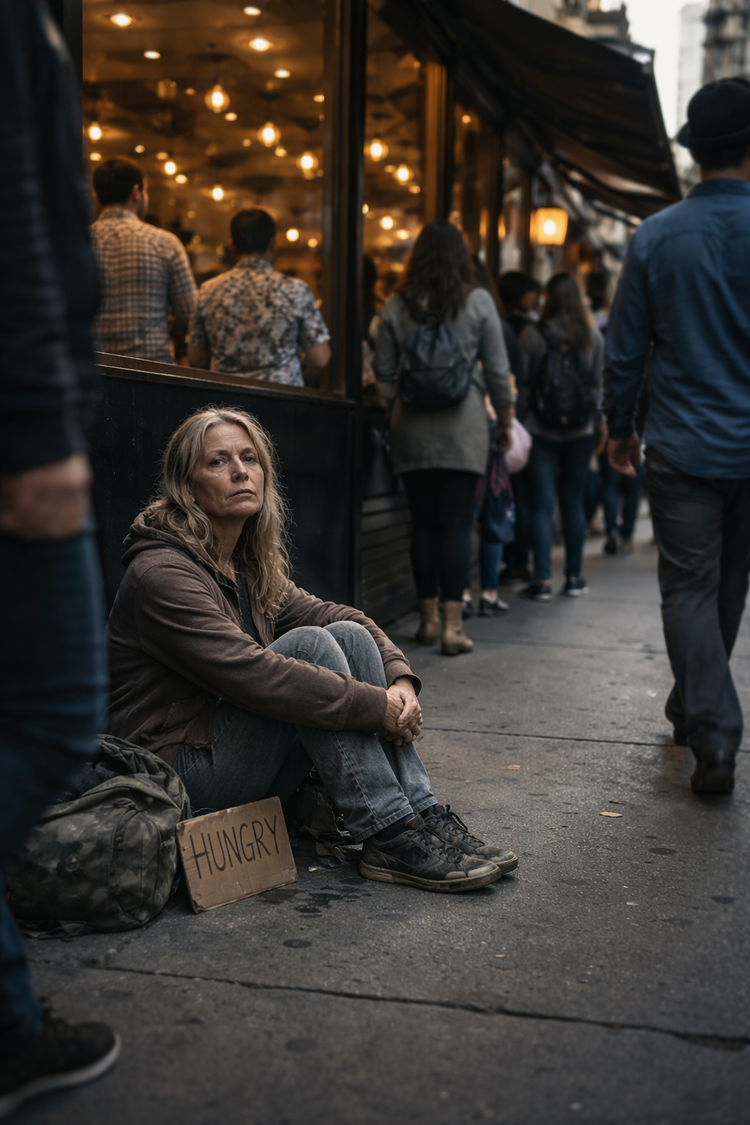
I love libraries. My commitment to them is not abstract. When the library in Lafayette was built, I made a significant contribution; my name is honored on its wall. That was before my ex‑husband stole $20 million from me, leaving me without resources, without a home, and without institutional support to regain what was taken. I live in a tent, yet my commitment to libraries remains unchanged. This loyalty stems from my belief that libraries, by preserving access to facts, fiction, history, and knowledge, are an antidote to the spread of ignorance and entrenched power structures.
Academically, gender and reading habits help illuminate why the San Francisco library’s checkout list might look as it does. Data on reading participation in the United States consistently show a gender gap in book reading habits that has persisted despite overall declines in reading rates. According to the 2022 Survey of Public Participation in the Arts conducted by the National Endowment for the Arts, fewer than half of all U.S. adults read any books in the previous year, but the share of women who read fiction or novels was significantly higher than that of men: around 46.9% of women versus 27.7% of men in 2022. That is a difference of nearly 20 percentage points between the genders (National Endowment for the Arts, 2022).
Moreover, this gender reading gap has remained remarkably stable over time. In 2012, over half of women (54.6%) reported reading fiction compared to just 35.1% of men; by 2022, both declined, but the gap persisted at roughly 19 percentage points (National Endowment for the Arts, 2022). Other research supports the idea that women are both more likely to read books and more socially engaged with reading activities such as book clubs and literary events. Comparative analysis indicates that women are more often introduced to reading in childhood and maintain stronger reading habits into adulthood, while men’s reading behavior tends to skew toward non‑fiction informational content or other leisure formats beyond traditional books (American Library Association, 2021).
International surveys reinforce this pattern. For example, polling in the United Kingdom shows higher percentages of women reporting that they read books than men, and similar divides have been observed in other Western countries (The Guardian, 2025).
The implications for public libraries are clear: libraries are not only repositories of knowledge; they are active spaces of cultural engagement where women’s voices and stories are encountered, shared, and valued. That the ten most‑checked‑out books in a major city library system in 2025 were predominantly authored by women should be understood not merely as a superficial trend, but as the reflection of the ongoing gender‑differentiated patterns in reading participation. When women read and borrow books in greater numbers, they shape the cultural life of that institution in real, measurable ways.
Beyond statistics, libraries are a counterbalance to the forces that would shrink public discourse to slogans, social media polarities, and shallow factoids. They stand for depth, reflection, and the messy complexity of human experience. In a society where public trust in institutions is fraying, where disinformation circulates easily, and where power often seeks to suppress inconvenient truths, libraries remain stewards of access to knowledge rather than gatekeepers of narratives. That alone justifies their existence and their cherished status in our civic life.
And despite the hardships I’ve endured—the wealth taken from me, the lack of institutional redress, the burning away of material comfort—I remain unchanged in this conviction: reading is resistance. Libraries fight patriarchy by centering knowledge, imagination, and information accessible to all. They are among our most valuable public institutions precisely because they preserve the conditions in which truth can be pursued rather than obscured.
References
American Library Association. (2021). Gender and reading habits: Trends in public library engagement. https://www.ala.org/tools/research/gender-reading-trends
National Endowment for the Arts. (2022). Survey of Public Participation in the Arts. https://www.arts.gov/stories/blog/2025/men-women-split-reading-real-and-persists-amid-historical-rate-declines
The Guardian. (2025, March 6). New poll finds 40% of Britons have not read a book in the past year. https://www.theguardian.com/books/2025/mar/06/new-poll-finds-40-of-britons-have-not-read-a-book-in-the-past-year



Comments ()