Candle in the Wind and Marilyn Monroe: How Pop Culture Sanitizes Female Exploitation

Candle in the Wind was written by Elton John and Bernie Taupin about Marilyn Monroe.
It is widely described as tender. Reverent. Compassionate.
It is also a masterclass in how culture converts structural harm into aesthetic tragedy.
The song does not indict the studio system.
It does not interrogate sexual commodification.
It does not examine pharmaceutical exploitation, coercive contracts, or the industrial machinery that profited from Monroe’s body while destabilizing her life.
Instead, it gives us weather.
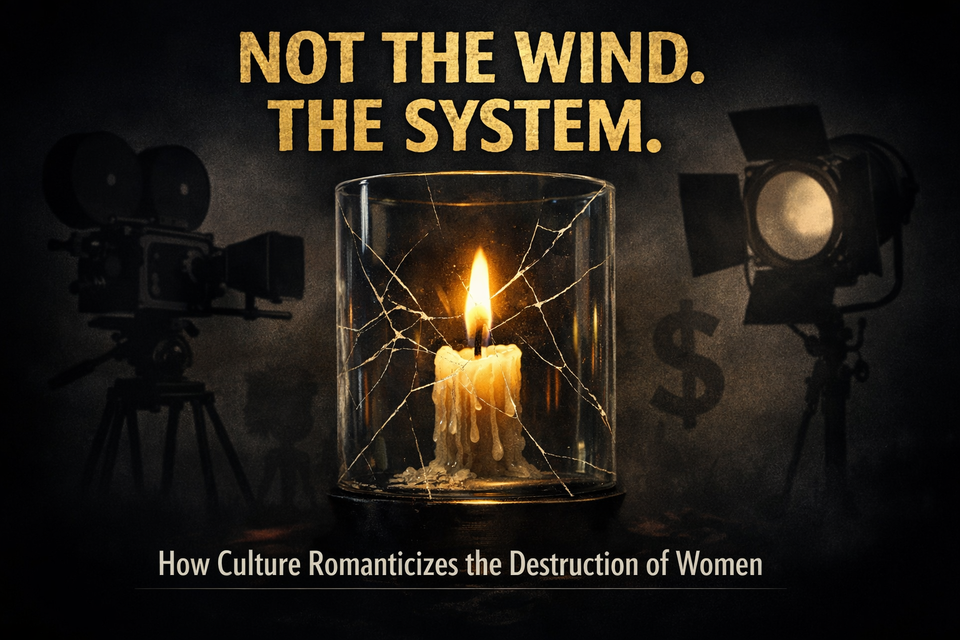
She is a candle.
The world is wind.
And wind, by definition, is no one’s fault.
This is not accidental lyricism. It is ideological framing.
When a woman is described as “too fragile” for the world, the world is quietly absolved. When her destruction is narrated as inevitability, exploitation becomes atmosphere. When grief is poetic enough, responsibility evaporates.
The metaphor does something powerful: it shifts the focus from systems to temperament.
Marilyn is not overworked, overexposed, under-protected, and economically extracted.
She is delicate.
She flickers.
She fades.
The problem becomes her sensitivity—not the machine that monetized it.
That is the romance of female fragility: it transforms preventable harm into beautiful sorrow. It invites tears instead of scrutiny. It offers admiration without accountability.
You can feel deeply moved by the flame.
You never have to examine who built the drafty room.
The cultural function of this framing is enormous. Because when women are remembered as fragile rather than exploited, their deaths become aesthetic events instead of political failures. Their suffering becomes texture. Their biographies become mood boards.
And once that template is established, it repeats.
The fragile star.
The doomed beauty.
The woman “too good for this world.”
Always the candle.
Never the arsonist.
Never the landlord who refused to close the windows.
This is how patriarchy preserves itself in memory. It mourns women intensely while refusing to name the structures that harmed them. It produces tribute after tribute that feels intimate and humane—while leaving the architecture of exploitation intact.
“Candle in the Wind” does not need to be malicious to be effective. Its softness is the point. It models a way of grieving women that is emotionally satisfying and politically neutral.
It allows culture to say:
How tragic.
How luminous.
How sad.
Without ever saying:
How avoidable.
How profitable.
How violent.
And that is the deeper seduction.
Because as long as women are remembered as flames extinguished by fate, the system that keeps striking the match never has to change.

Comments ()