
Advocate’s Guide: Using the Emergency Housing Mandate: SAVING LIVES
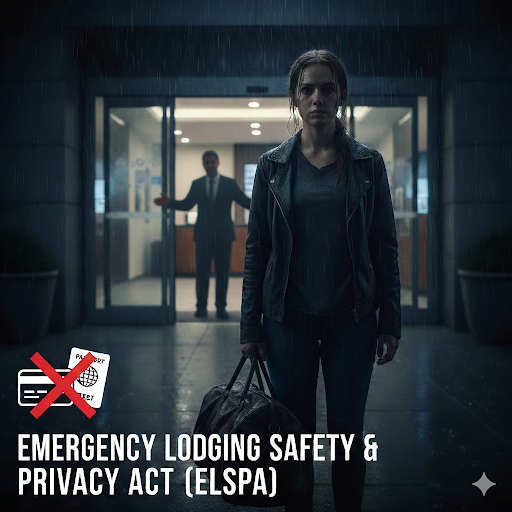
Advocate’s Guide: Using the Emergency Housing Mandate
Purpose of This Document
When a survivor is fleeing an abuser or trafficker, their financial assets and identification are often the first things stolen or controlled. Standard hotel "SOPs" (Standard Operating Procedures) requiring a physical card at check-in—even when the room is pre-paid—can and often does act as an enforcement arm for the trafficker. This must end immediately.
This document is designed to shift the risk. It moves the conversation from "corporate policy" to "legal liability," forcing hotel staff to acknowledge that by denying a pre-paid room, they are making themselves an accessory to any harm that follows.
Every advocate using this must document any friction to preventing their person from getting safe housing.
How to Use This Document
- Preparation: Fill out the bracketed information ([Current Date], [Room Number], [Payment Method]) before arriving at the front desk.
- The Initial Push: Attempt a standard check-in first. If the clerk insists on a secondary card or ID that the survivor does not have, immediately present this document.
- Identify the Decision Maker: Do not argue with front-desk staff who may not have the authority to waive rules. Ask for the Manager on Duty or Corporate Compliance Officer and hand them this notice.
- The "Duty of Care" Argument: Verbally emphasize Section III. Remind them that "Policy is not Law." By refusing entry to a paid guest who is in danger, the hotel is accepting Strict Liability for what happens to that person on their sidewalk.
- The Signature Trap: Ask the staff member to sign the acknowledgement.
- If they sign: You have a record of their awareness of the risk.
- If they refuse: Note their name and the time on the form. Inform them that their refusal to sign will be used as evidence of "gross negligence" should the survivor be harmed after being turned away.
Critical Safety Reminders
- Safety First: If the hotel staff becomes hostile or calls the police, prioritize the survivor’s immediate physical safety over winning the argument. Have a "Plan B" location ready.
- Documentation: Always keep a digital photo of the signed (or unsigned) document once it has been presented.
- Advocacy Context: Use this as a bridge while we continue to push for state-level laws that permanently abolish secondary card requirements for emergency lodging.
To ensure this mandate leads to actual legislative change, every advocate must treat a hotel's refusal not just as a setback, but as legal and political evidence.
You should document these incidents in three distinct "layers" to maximize the pressure on both the industry and lawmakers.
1. The Incident Log (Immediate Evidence)
Every advocate should carry a Friction Documentation Log attached to the back of the mandate. This serves as a "black box" recording of the denial.
| Date/Time | Hotel Name & Location | Staff Member Name/ID | Specific Barrier (e.g., "Demanded 2nd Card") | Result (Entry/Denial) |
| 02/23/26 | Grand Plaza, NYC | "Manager Sarah" | Refused pre-paid auth; insisted on physical card. | DENIED |
- Pro-Tip: If they refuse to sign the mandate, write "REFUSED TO ACKNOWLEDGE" in large letters across the signature line and take a photo of the document in front of the hotel’s signage.
2. Centralized Internal Tracking (Policy Reform Evidence)
If you are part of an organization, you need a Centralized Barrier Database (e.g., a shared Google Form, Airtable, or internal CRM). This data is what we will take to state legislators to prove that current "Standard Operating Procedures" are killing people.
Fields to track for every advocate:
- Chain/Brand: (e.g., Marriott, Hilton, Choice Hotels) — This helps identify which corporations need to be targeted for systemic policy changes.
- The "Harm Narrative": Briefly describe where the survivor had to go because they were turned away (e.g., "Had to return to car in high-risk area").
- Financial Impact: Was the money refunded? Many hotels keep the "pre-paid" funds even if they deny entry, which is theft of advocacy resources.
3. External Reporting (Legal & Regulatory Pressure)
To create immediate "friction" for the hotel, report every denial to the following entities:
- Better Business Bureau (BBB): File a complaint citing "Unfair Business Practices" and "Breach of Contract" (since the room was paid for).
- State Attorney General’s Office: Most AGs have a Consumer Protection or Civil Rights division. File a report stating the hotel is enforcing "discriminatory barriers to emergency housing."
- Corporate Compliance: Send a copy of the unsigned/signed mandate to the hotel's Global Headquarters Compliance Department. Tell them: "Your local manager at [Location] has been formally notified of their liability. Any future harm to our clients at this location is now 'foreseeable' and 'preventable' by you."
NOTICE OF CONDITIONAL LIABILITY & EMERGENCY HOUSING MANDATE
TO: Hotel Management / Corporate Compliance / On-Site Security
RE: Denial of Entry / Secondary Card Requirements / ID Barriers
DATE: [Current Date]
I. FORMAL NOTICE OF THIRD-PARTY PAYMENT
Be advised that payment for Room [Number, if known] and all associated costs (including a pre-authorized buffer for incidentals) has been fully executed via [Digital Authorization / Credit Card Authorization Form / Advocate Organization].
Under the principles of ELSPA (Emergency Lodging Security & Protection Act), the financial transaction is complete. The hotel has no further "insurable interest" in the guest’s personal financial or identification documents.
II. DIRECT REBUTTAL OF "STANDARD OPERATING PROCEDURES"
The following "policies" are hereby identified as High-Risk Negligence:
- Secondary Card Demands: Demanding a personal credit card from a survivor of trafficking or domestic battery—whose financial assets are often controlled or frozen by the abuser—is a discriminatory barrier to life-saving shelter.
- ID Verification Requirements: Forcing a guest to produce a government ID when the room is already paid for acts as a de facto "border checkpoint" for traffickers. If a victim’s ID has been stolen or withheld by an abuser, your demand for it enforces the abuser’s control.
- "Incidentals" as Priority: Prioritizing potential room damage or minibar charges over the immediate physical safety of a human being is a gross violation of a business’s "Duty of Care."
III. STATEMENT OF STRICT LIABILITY
Should this hotel refuse entry to the guest for whom payment has been cleared, this establishment and its management shall be held strictly liable for any harm, injury, or fatality that occurs to the guest after being turned away.
- Policy is Not Law: Corporate "Standard Operating Procedures" do not supersede the duty to prevent foreseeable harm.
- Complicity: By denying a safe haven based on administrative technicalities, this hotel is acting as an accessory to the ongoing crimes of the abuser/trafficker by returning the victim to their reach.
IV. DEMAND FOR IMMEDIATE OCCUPANCY
If the funds are cleared, the door must open. No further documentation is required to fulfill the contract of lodging. Any delay in check-in is an act of human rights obstruction.
Authorized by: __________________________ (Advocate/Legal Rep/Payer)
Acknowledged by (Hotel Staff): __________________________
Note to Staff: If you refuse to sign this acknowledgement, it will be noted that you were informed of the risk to the guest's life and chose to prioritize corporate paperwork over human safety.

Comments ()